LIFE × EVOLUTION
The First Flowering Plants
~140 million years ago (origin debated)
Phanerozoic · Mesozoic · Cretaceous
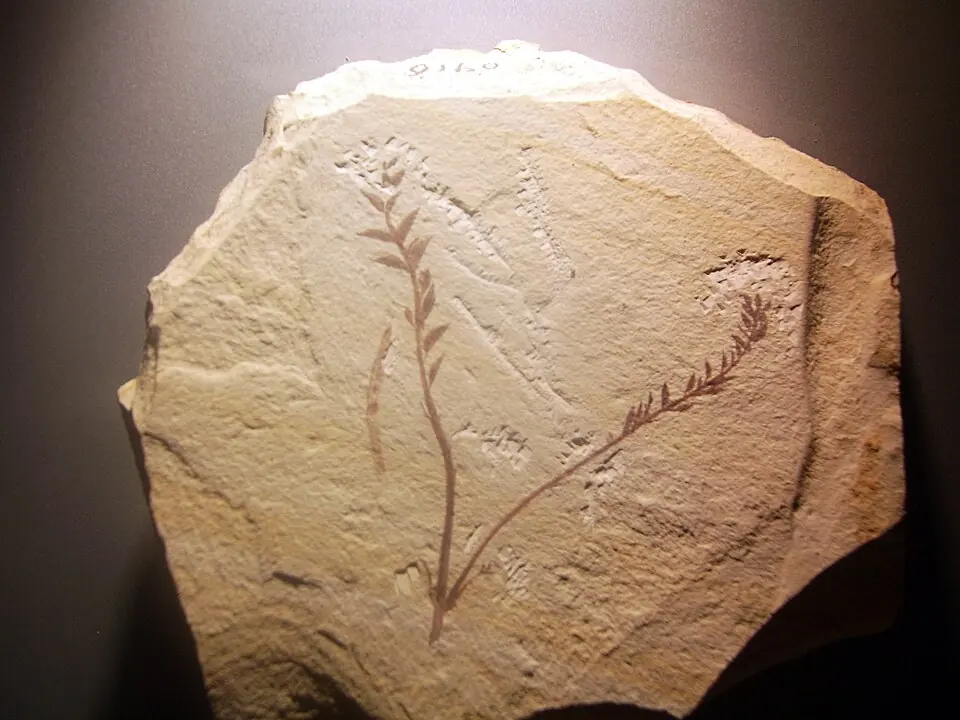
Flowering plants, whose flower encloses the seed in a closed structure called the carpel and displays itself to animals, began about 140 million years ago or earlier, and the date of their origin is the longest-running argument in botany.
Flowering plants, or angiosperms, are the plants that produce flowers. A flower encloses the seed within a carpel, the structure that gives the group its name, since angiosperm means seed in a vessel. A flower also displays itself to animals. The date at which the group began is the longest-running argument in botany. Unambiguous fossils begin about 135 million years ago. Silvestro and colleagues (2021) counted fifteen thousand fossil occurrences, the recorded finds of a fossil, across two hundred families, and place several of those families earlier, in the Jurassic. One molecular clock, a method that dates lineages from the differences accumulated in their DNA, gives a still older origin, at the end of the Triassic, the period before the Jurassic. The group spread later, in the Cretaceous, the period after the Jurassic: its lineages multiplied between 125 and 72 million years ago.
Why it matters
Three quarters of living plant species are flowering plants, and almost every food plant is one of them. Flowering plants also transformed terrestrial food webs, the networks of who eats whom, from the base upwards: there were more insects, then more of the birds and mammals that eat insects.
Dating & uncertaintyDisputed
Unambiguous fossils of flowering plants begin in the Early Cretaceous, around 135 to 125 million years ago. Analyses that correct for the incomplete sampling of fossils, and most molecular clocks, place the origin of the group in the Jurassic or earlier. The interval between these dates and the first unambiguous fossils is called the Jurassic angiosperm gap. The question is whether the first flowering plants existed during that interval without leaving fossils, or did not yet exist.
Earth history as one day
23:15:3544 min 24 s before midnight
if Earth’s 4.54 billion years were compressed into a single day