LANGUAGE × TECHNOLOGY
The Invention of Zero
628 CE
History · Middle Ages · Holocene · Meghalayan
Zero as a number, and not just a mark for an empty place, took form in India, where Brahmagupta set out its rules of calculation around 628.
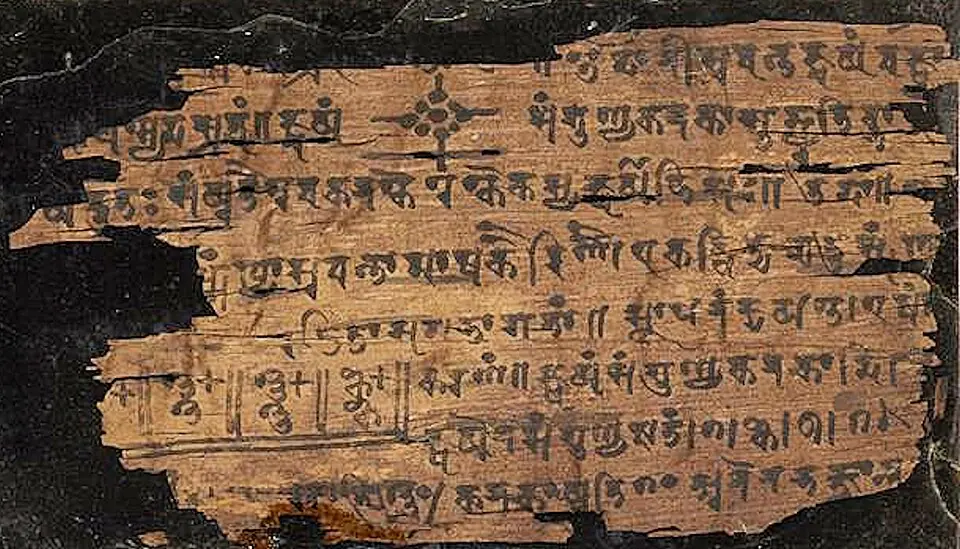
Zero considered as a number, capable of entering into operations, is distinct from zero used as a mere mark of an empty position, known to Babylonian and Maya scribes. This conception takes form in India: place-value numeration accompanied by a zero is attested in texts from the fifth century and in inscriptions from the early sixth, and Brahmagupta sets out around 628, in the Brahmasphutasiddhanta, the rules of calculation applicable to zero. It is place-value numeration that makes the sign necessary: once the value of a digit depends on its rank, the absence of units at a given rank must be noted, failing which 105 and 15 would be written identically. Radiocarbon dating of the Bakhshali manuscript, which bears small dots, has revived discussion of the antiquity of the written zero.
Why it matters
Decimal place-value notation completed by zero spread through Arabic-speaking mathematicians and merchants, then was adopted in Europe, where its use remained contested into the fifteenth century. It constitutes the support of all later written calculation, from mathematics to accounting and computing.
Dating & uncertaintyDisputed
Zero appears in stages in Indian mathematics: a zero mark on inscriptions and tablets from the early sixth century, texts a century earlier, then the statement of rules by Brahmagupta around 628. Radiocarbon dated the oldest folio of the Bakhshali manuscript to the third or fourth century, a dating contested on the grounds that a manuscript is dated by its most recent folio: the object being an assembly of leaves copied at different dates, it cannot be earlier than its most recent part, and dating an old leaf dates only that leaf. The exact function of the dots appearing in that manuscript is also the object of divergent interpretations.
Our species’ history as one day
23:53:366 min 23 s before midnight
if the 315,000 years of Homo sapiens were compressed into a single day