PEOPLING
The Peopling of Polynesia
~1200 CE
History · Middle Ages · Holocene · Meghalayan
The peopling of eastern Polynesia, completed around 1200 from Hawai'i to Rapa Nui and Aotearoa, was the last settlement of uninhabited lands by our species.
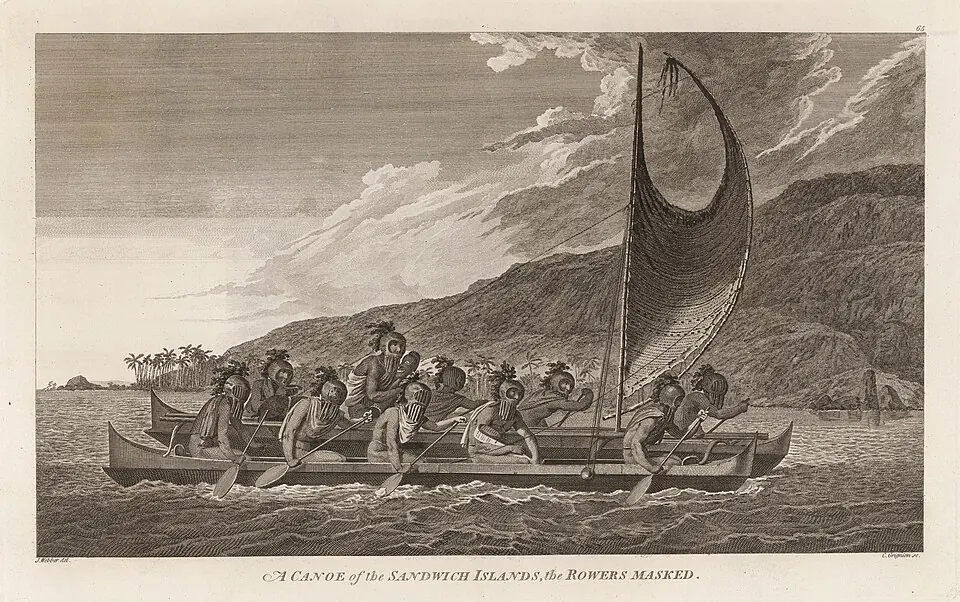
The peopling of eastern Polynesia, completed around 1200, constitutes the last phase of occupation by the human species of previously uninhabited lands, from Hawai'i to Rapa Nui and finally Aotearoa. Navigation rests on three categories of indication. The stars provide one direction; the swell provides another, an established swell retaining its orientation over several days, so that a course is held by the perception of the hull's movement even under overcast sky; and land birds, which go out to sea in the morning and return to their island in the evening, indicate the direction of land before it becomes visible. Genetic data further establish contact between Polynesian and Native American populations in the same period, prior to any European navigation in that ocean, and ancient Rapanui DNA does not confirm the demographic collapse attributed to the island.
Why it matters
The expansion covers some ten million square kilometres of ocean, by means of double-hulled canoes and orally transmitted navigational knowledge. The genetic demonstration of contact with the Americas establishes that the two hemispheres had met before the European arrival, without it being known which of the two groups made the crossing. As for the narrative of self-destruction attached to Rapa Nui, it is not supported by the fifteen ancient genomes available.
Dating & uncertainty
The remote islands of eastern Polynesia were settled in a rapid wave centred around 1200, a date later than that long accepted. Two methods place contact with the Americas in the same period: around 1200 from present-day Polynesian genomes, between 1250 and 1430 from ancient Rapanui genomes. The location of that contact remains debated, the first study placing a single episode in eastern Polynesia, prior to the settlement of Rapa Nui.
Our species’ history as one day
23:56:133 min 47 s before midnight
if the 315,000 years of Homo sapiens were compressed into a single day