PEOPLING
The Last Neanderthals
~40,000 years ago
Palaeolithic · Upper Palaeolithic · Last glacial
The Neanderthals disappeared from Europe about 40,000 years ago, region by region, after several millennia alongside Homo sapiens.
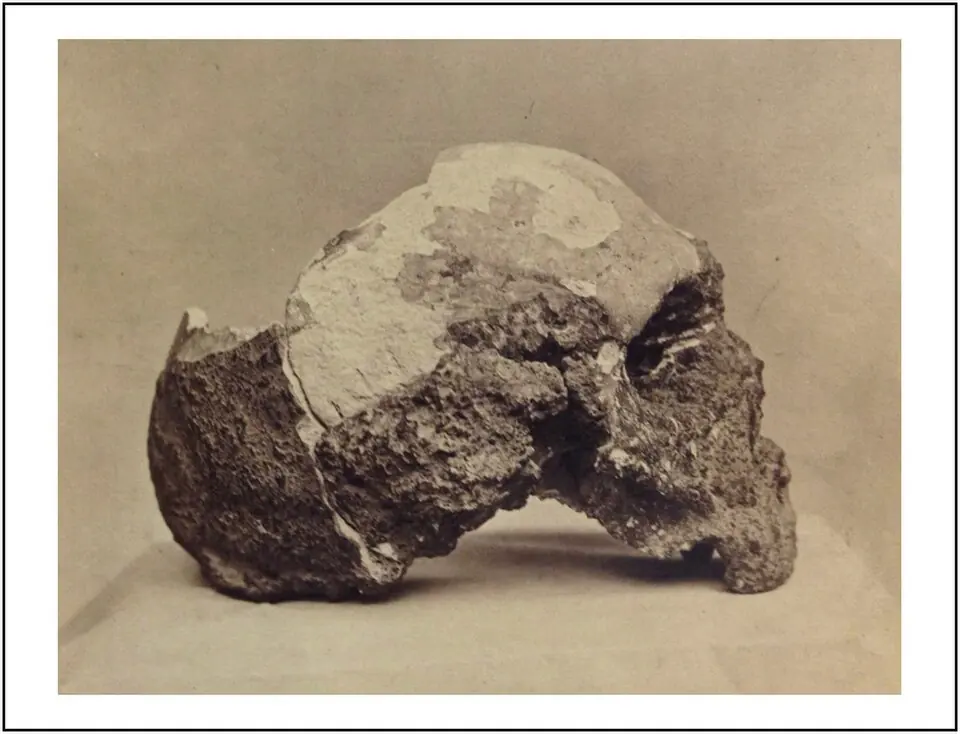
The disappearance of the Neanderthals designates their exit from the European archaeological record, which occurred around 40,000 years ago, region by region rather than simultaneously, after an overlap of 2,600 to 5,400 years with newly arrived Homo sapiens populations. The lineage had been present in Eurasia for more than three hundred thousand years. No single cause is established: small population size, climatic constraints and genetic dilution into larger populations are the factors most often retained, with no demonstrated hierarchy among them.
Why it matters
The case is discussed without any need to invoke technical or cognitive superiority, demography sufficing to account for an extinction. In groups where births per generation are few, an unfavourable period is not compensated, the loss of active adults is not made up, and random fluctuation in numbers may suffice to end a lineage. Several millennia of coexistence moreover permitted exchanges, genetic with certainty, technical and symbolic as a matter of debate; a fraction of the Neanderthal genome survives in most present-day populations.
Dating & uncertainty
Bayesian modelling of forty re-dated sites places the end of the Mousterian, the industry associated with Neanderthals, between 41,030 and 39,260 calibrated years before present at a European scale, the disappearance occurring at different dates by region. What is dated is the last occurrence of the toolkit and not the last individual, which no method can reach. Late survivals claimed in Iberia and Belgium have not withstood re-dating using stricter purification protocols, contaminated collagen having made some Belgian bones appear several millennia younger.
Our species’ history as one day
20:57:083 h 3 min before midnight
if the 315,000 years of Homo sapiens were compressed into a single day