SUBSISTENCE
Kuk Swamp: Farming in New Guinea
~7,000 years ago
Neolithic · Neolithic · Holocene · Northgrippian
At Kuk, in the highlands of New Guinea, people were cultivating tubers and fruit crops about 7,000 years ago, an invention of agriculture independent of all others.
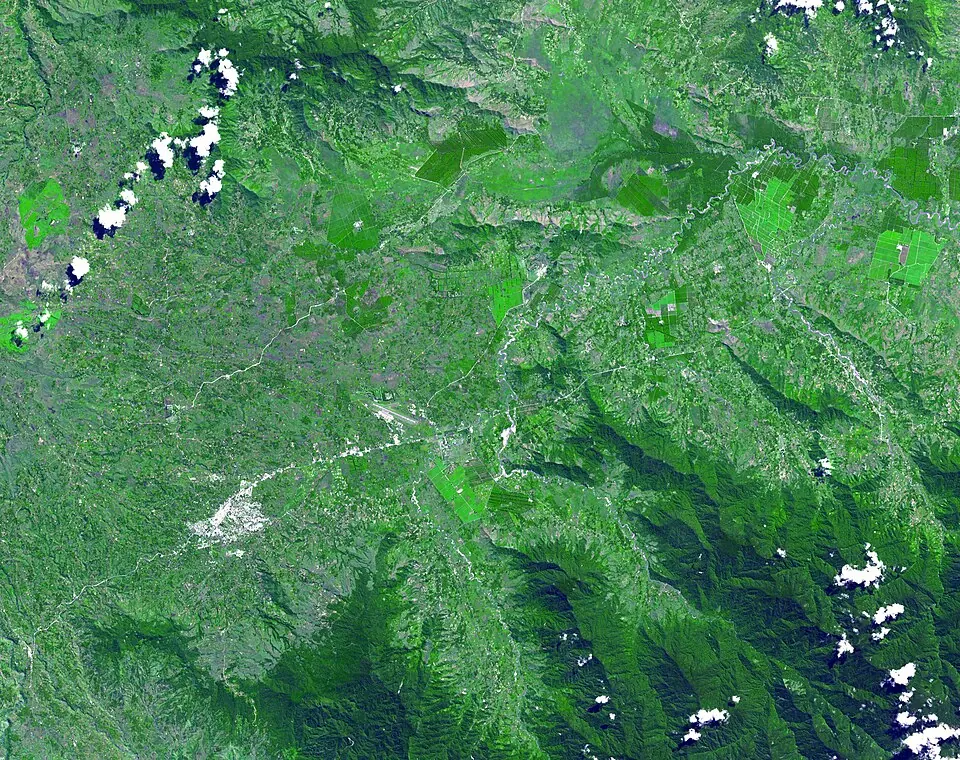
The Kuk site, in the Wahgi valley of the Papua New Guinea highlands, inscribed as a World Heritage site in 2008, documents an independent invention of agriculture, founded on tuber and fruit crops rather than cereals, and without the plough. Exploitation of taro at the wetland margin is attested from the early Holocene, mound cultivation about 7,000 years ago, with intensive banana cultivation, and drainage networks 4,300 years ago. No installation has been preserved in elevation, but two categories of evidence restore them: the mounds and ditches left in the buried soil an alternation of disturbed and undisturbed earth, visible in section, and banana phytoliths present in those same levels identify the cultivated species.
Why it matters
Agriculture did not diffuse from a single Near Eastern centre: it was independently invented in several regions and on different plant bases, the New Guinea case constituting one of the best-established demonstrations. The domestication of the banana moreover begins with the wild species of New Guinea, before reaching, through successive hybridisations, Asia and then West Africa.
Dating & uncertainty
At Kuk, plant exploitation at the wetland margin is attested from about 10,200 years ago, mound cultivation from about 7,000 and ditch networks from about 4,300; the date retained corresponds to the mounds, the least ambiguous agricultural indicator in the sequence.
Our species’ history as one day
23:28:0032 min before midnight
if the 315,000 years of Homo sapiens were compressed into a single day