SUBSISTENCE
Pearl Millet and Sorghum
~4,900 years ago
History · Bronze Age · Holocene · Northgrippian
Pearl millet and sorghum, the two cereals domesticated south of the Sahara, were taken into cultivation as the desert dried, from about 4,900 years ago.
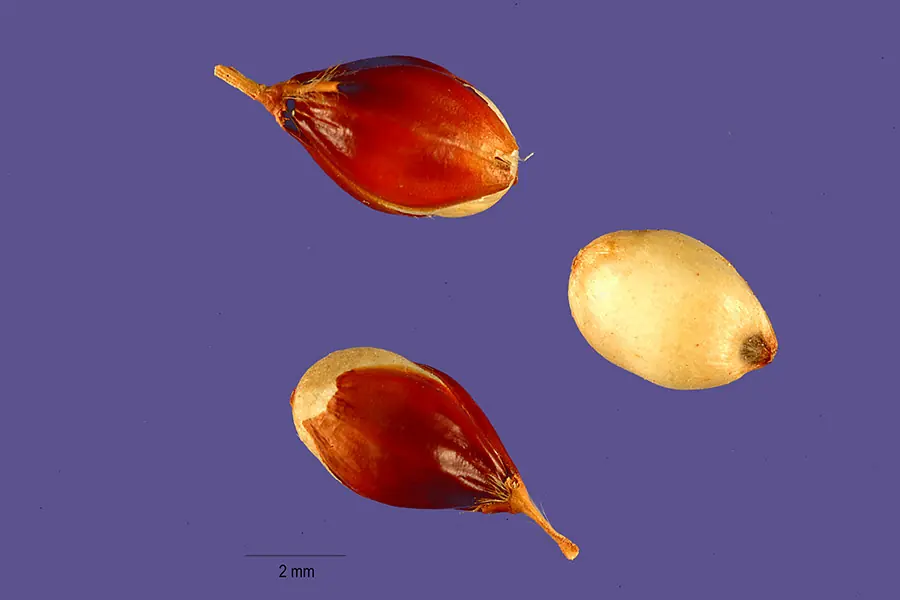
Pearl millet, Pennisetum glaucum, and sorghum, Sorghum bicolor, constitute the two cereals domesticated in sub-Saharan Africa at the time of the drying of the Sahara. The genomes of the former place its origin in the western Sahara, the expansion of its cultivation being dated to about 4,900 years ago; the latter is attested in the eastern Sahel by grain impressions recorded on pottery of the fourth millennium BCE and already presenting domestic characters. These impressions result from a technical process that is unintentionally documentary: potters incorporated chaff and grain into the clay, firing destroyed the organic matter, and the void left retains the exact shape of the seed, the criterion that precisely distinguishes a domesticated grain from a wild one. Both cereals subsequently reached India, the millet in under a millennium.
Why it matters
Africa constitutes an independent centre of domestication, whose crops were formed under conditions of heat and low rainfall. The drought tolerance of these two species makes them today a genetic resource of general interest, as the areas concerned expand.
Dating & uncertainty
Pearl millet genomes place its domestication in the western Sahara and date the expansion of its cultivation to about 4,900 years ago, the period of the desert's drying. In the eastern Sahel, grain impressions on pottery of the fourth millennium BCE indicate a sorghum already presenting domestic characters. The crossing of the Indian Ocean is established for both species; for millet, current data assess it at less than a millennium.
Our species’ history as one day
23:37:3622 min 24 s before midnight
if the 315,000 years of Homo sapiens were compressed into a single day