BELIEFS × SOCIETY
Gobekli Tepe: a Temple Before Farming
~11,500 years ago
Neolithic · Neolithic · Holocene · Greenlandian
At Gobekli Tepe, in Turkey, hunter-gatherers raised circles of carved stone pillars about 11,500 years ago, before any farming.
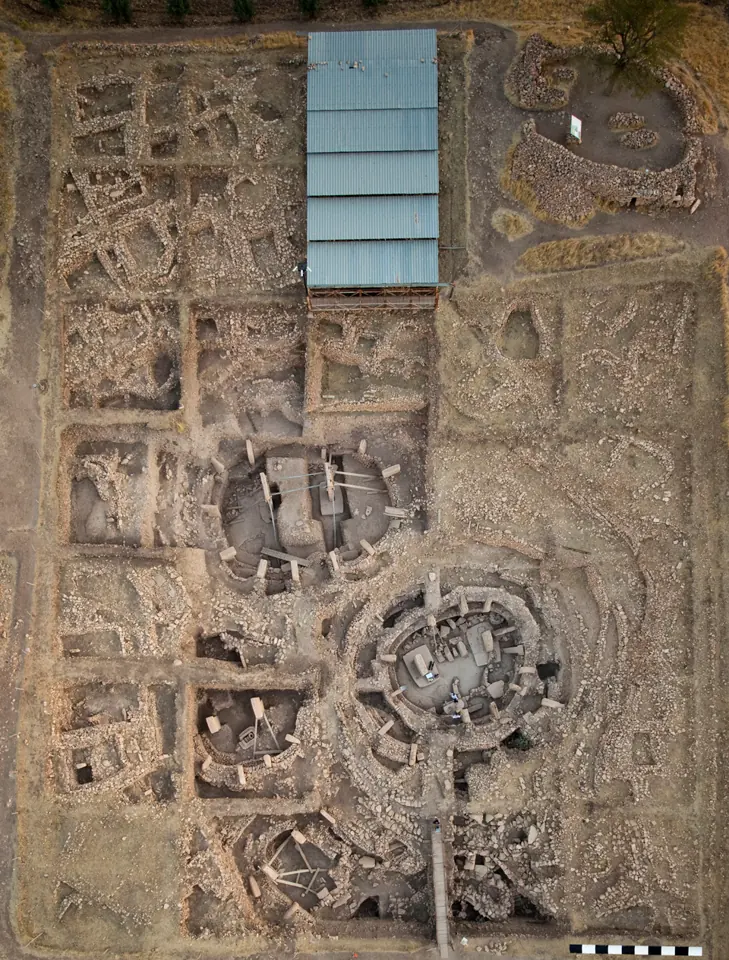
Gobekli Tepe is an archaeological site in south-eastern Turkey, near Sanliurfa, excavated from 1995 and inscribed as a World Heritage site in 2018. It comprises circular enclosures formed of carved limestone pillars, up to five and a half metres tall, bearing representations of foxes, snakes, boars and cranes. Its builders did not practise agriculture, as the food remains establish: the game consumed at gatherings is wild, aurochs and gazelle, and the cereals of the site are likewise wild, where an agricultural population would have left remains of herded animals and domesticated grain. Building and then burying the enclosures presupposed the assembly of dispersed groups; recent seasons have brought to light dwellings and water installations nearby.
Why it matters
The classically accepted sequence made monumental architecture dependent on agricultural surplus. The order is here inverted, and several authors consider that the gathering itself, the collective construction, the feasting and the practices accompanying them may have contributed to settling populations, cultivation subsequently answering the needs so created.
Dating & uncertainty
The enclosures were built and used between about 9600 and 8200 BCE, that is 11,600 to 10,200 years ago. Interpretation of the site has evolved faster than the excavation: recent seasons document domestic life around the great buildings, and the readings proposed range from sanctuary to feasting place to settlement provided with monuments.
Our species’ history as one day
23:07:2552 min 34 s before midnight
if the 315,000 years of Homo sapiens were compressed into a single day