SOCIETY
Catalhoyuk: a Neolithic Town
~9,100 years ago
Neolithic · Neolithic · Holocene · Greenlandian
Catalhoyuk, in central Anatolia, housed several thousand people about 9,100 years ago in houses packed together without streets.
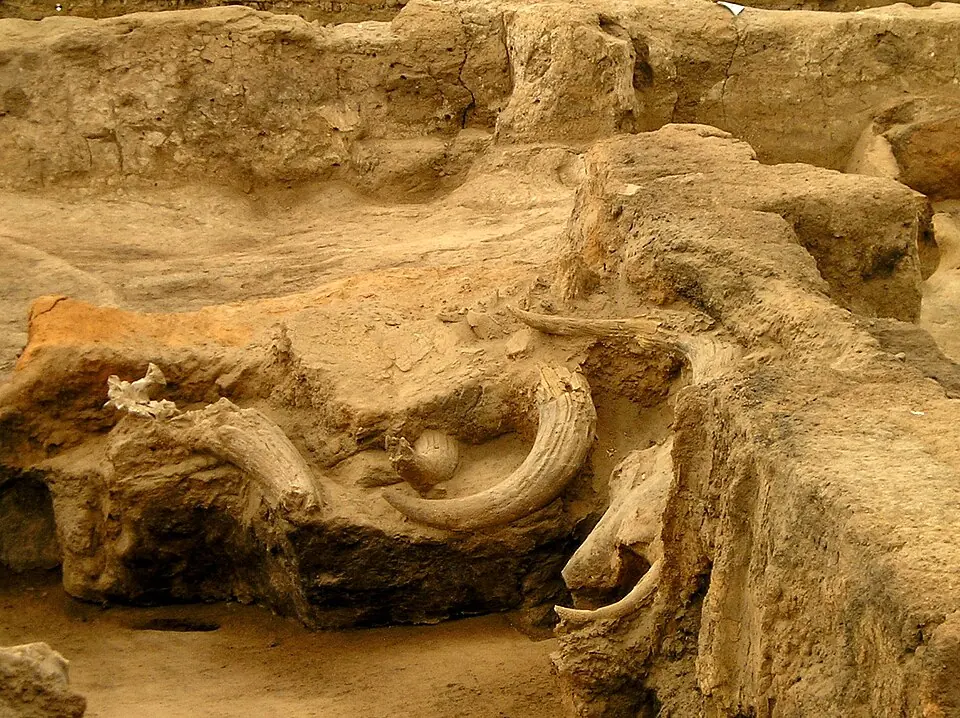
Catalhoyuk is a Neolithic site on the Konya plain, in central Anatolia, inscribed as a World Heritage site in 2012, occupied for more than a millennium by several thousand inhabitants. The houses abut one another without streets, access being from the roof by ladder; the dead are interred beneath the floors and the walls carry paintings. Excavation has identified neither palace, nor distinct cultic complex, nor privileged quarter: access to staple foods appears comparable from house to house, differences bearing only on less essential goods, and the increase observed in the middle of the sequence appears to have been contained.
Why it matters
The site constitutes a counter-example to the hypothesis of a necessary link between population concentration and instituted hierarchy, a settlement of several thousand inhabitants having persisted for centuries with no attested durable inequality. The large grinding stones, costly to acquire, appear to have been shared between houses, and most were intentionally destroyed, which has been interpreted as a deliberate impediment to the transmission of property.
Dating & uncertainty
The mound was occupied for well over a millennium; the date retained corresponds to the foundation. Statements concerning equality rest on Gini coefficients, a measure that summarises a distribution in a number between zero, where all units hold the same, and one, where a single unit holds everything. They were calculated on storage capacity, tools and domestic equipment, which permits comparison with measures of inequality established elsewhere, for ancient as for present-day periods.
Our species’ history as one day
23:18:2441 min 36 s before midnight
if the 315,000 years of Homo sapiens were compressed into a single day