ART × BELIEFS
The Shigir Idol
~12,000 years ago
Palaeolithic · Upper Palaeolithic · Last glacial
A larch-wood sculpture more than five metres tall, found in a Urals bog, is about 12,000 years old, the oldest known monumental wooden statue.
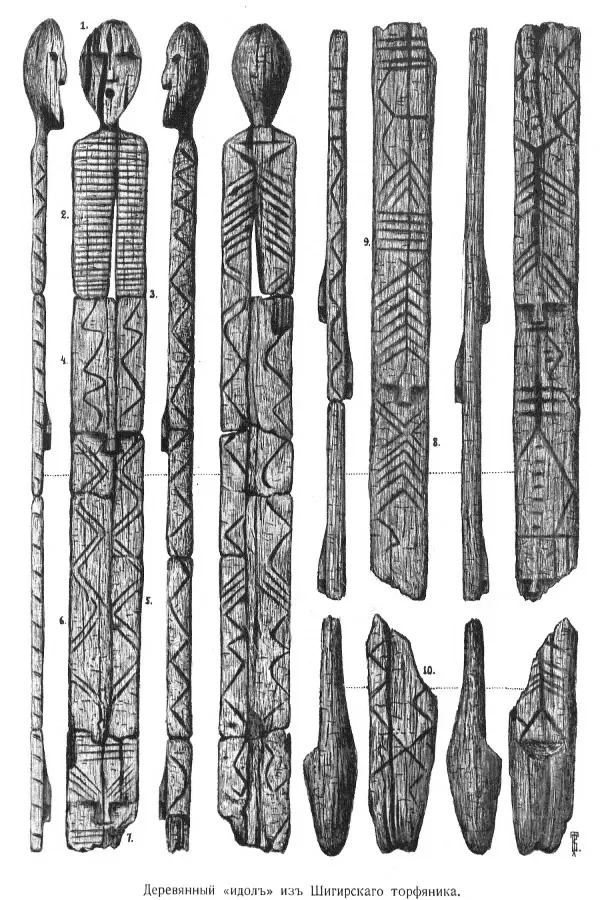
The Shigir idol is a monumental sculpture in larch wood, brought to light in 1890 by gold prospectors in a peat bog of the Urals and conserved in Yekaterinburg. Assembled, it stands more than five metres tall and comprises a head with an open mouth, a body covered in zigzag motifs and at least seven further faces. Radiocarbon dates place it near the beginning of the Holocene, about 12,000 years ago, which makes it the oldest known monumental wooden sculpture.
Why it matters
Objects carved in wood survive only in anaerobic conditions, and this example documents a category of production of which almost nothing remains. It establishes that hunter-gatherers of the early Holocene raised monumental figures bearing a complex graphic repertoire, in the same centuries as the carved pillars of Gobekli Tepe. Monumentality is therefore not conditioned by agriculture; only its preservation is.
Dating & uncertaintyDisputed
Accelerator radiocarbon dates applied to the wood place the sculpture around 10,000 BCE, and its zigzag ornamentation accords with Late Glacial repertoires. Two objections are raised. The first invokes the date of peat formation: no object can be buried in a deposit that does not yet exist, so that a recent bog would cap the age of its contents. The second concerns what the method measures, namely the growth of the wood and not the execution of the sculpture: a trunk already old when worked would yield an age greater than that of the object. Stylistic parallels from the fourth and third millennia BCE are also advanced. Direct measurements to date support the early chronology.
Our species’ history as one day
23:05:0854 min 51 s before midnight
if the 315,000 years of Homo sapiens were compressed into a single day