SUBSISTENCE
The First Domestic Goats and Sheep
~10,400 years ago
Neolithic · Neolithic · Holocene · Greenlandian
Goats and sheep became the first livestock about 10,400 years ago, in the uplands between Anatolia and the Zagros.
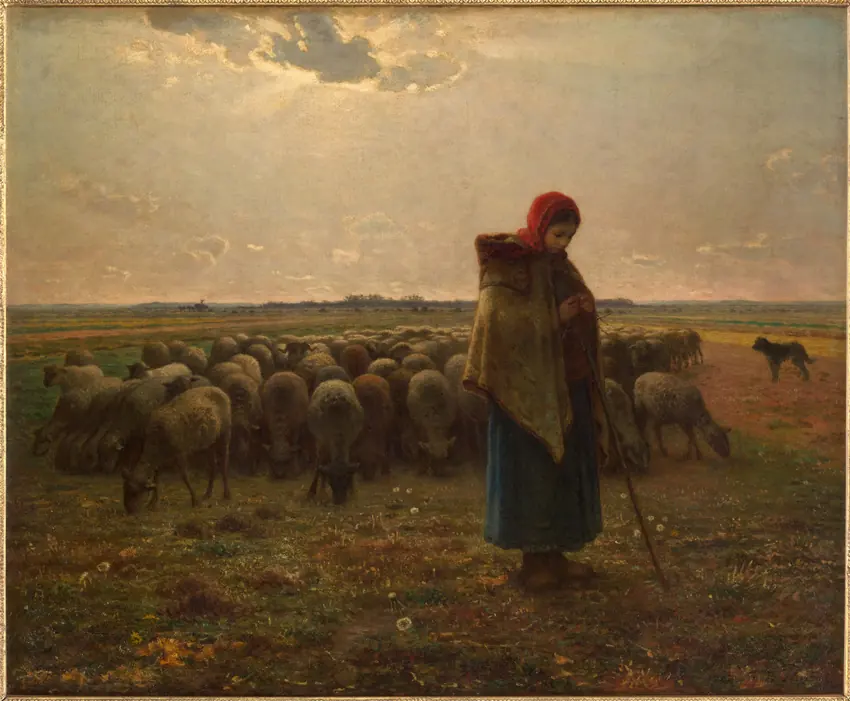
The domestication of the first livestock designates the shift from hunting to the keeping of live goats and sheep, in the uplands extending from Anatolia to the Zagros, about 10,400 years ago. Genomes of ancient goats from Iran attest herds already managed and genetically distinct from wild populations 10,200 years ago. At Asikli Hoyuk, in central Anatolia, the practice begins with the capture of young wild animals, lambs and kids raised for a few months in the settlement before slaughter; it appeared there locally, which indicates several independent centres.
Why it matters
Herding converts meat, milk, hides and dung into regular rather than fortuitous resources, and institutes between human and animal populations a durable association whose epidemiological consequences will be considerable. The slaughter and breeding decisions taken by herders further constitute an artificial selection predating any formalisation.
Dating & uncertainty
The management of goats becomes perceptible in ancient genomes of the Zagros around 8200 BCE, that is about 10,200 years ago, and a local route to herding opens at Asikli Hoyuk around 8400 BCE. Skeletal modifications appear only after a thousand years of penning and selective slaughter. The lag is explicable: a penned herd breeds in a closed circuit and ceases to receive genetic input from the surrounding wild population, so that it diverges within a few centuries, while morphology, which selection modifies more slowly, remains that of the wild form.
Our species’ history as one day
23:12:2747 min 33 s before midnight
if the 315,000 years of Homo sapiens were compressed into a single day