TECHNOLOGY
When Clothing Began: Dated by Lice
~83,000 years ago or more
Palaeolithic · Middle Stone Age · Last glacial
The genetics of the body louse, which lives only in clothing, dates the habit of dressing to at least 83,000 years ago.
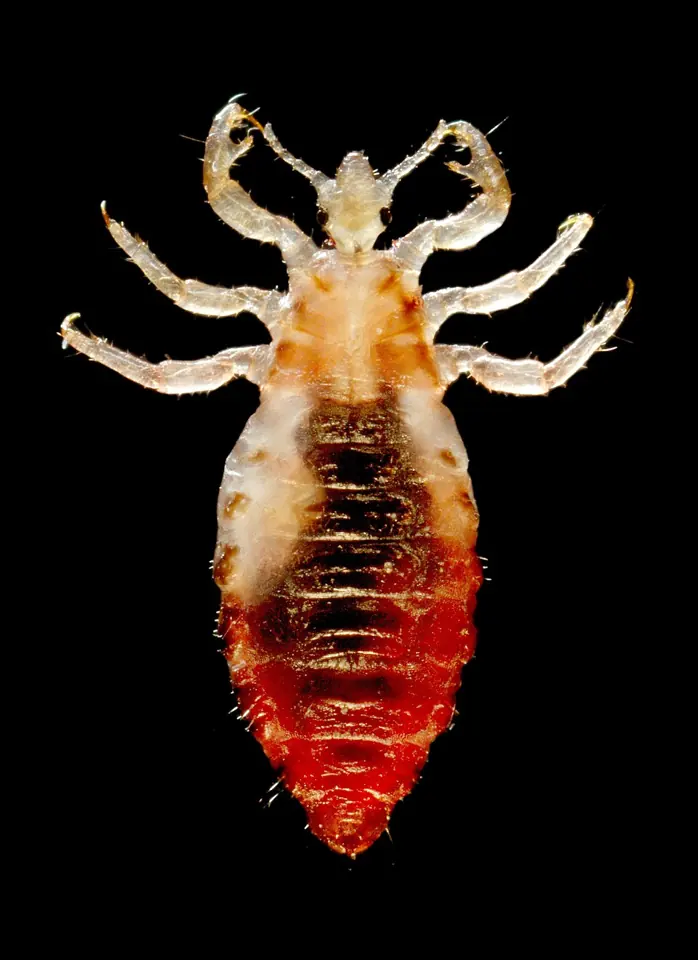
Dating the appearance of clothing rests on the genetics of a parasite, since textiles do not survive. The human body louse, Pediculus humanus humanus, lives in clothing and feeds on the skin beneath; it differentiated from the head louse, Pediculus humanus capitis, once such a habitat existed, so that dating the separation amounts to dating the use of clothing. The method employed is the molecular clock: two lineages long separated have accumulated more differences in their DNA than two recently separated, and counting those differences, set against an estimated rate of accumulation, converts them into elapsed time. Applied to louse DNA, it places the separation between roughly 170,000 and 70,000 years ago, in Africa.
Why it matters
Clothing constitutes a portable microclimate, a condition of lasting occupation of cold latitudes by a species of tropical origin, and is accessible to dating by almost no other route. The case illustrates more generally the use of commensal species as archives: lice, dogs and gut microbiota each preserve a trace of human history in their own genome.
Dating & uncertaintyDisputed
Two studies reach different results, the discrepancy arising from the rate of accumulation adopted: the 2003 study gives the body louse an origin no earlier than about 72,000 years, give or take 42,000, while a 2010 Bayesian analysis places it at at least 83,000 and possibly 170,000. The date shown retains the minimum of the latter. Both point to Africa and to anatomically modern populations, prior to settlement in cold latitudes.
Our species’ history as one day
17:40:346 h 19 min before midnight
if the 315,000 years of Homo sapiens were compressed into a single day