ENVIRONMENT × GENETICS
The Last Mammoths of Wrangel
~4,000 years ago
History · Bronze Age · Holocene · Meghalayan
The last woolly mammoths lived on Wrangel Island, in the Arctic north-east of Siberia, until about 4,000 years ago, millennia after the species had vanished from the continents.
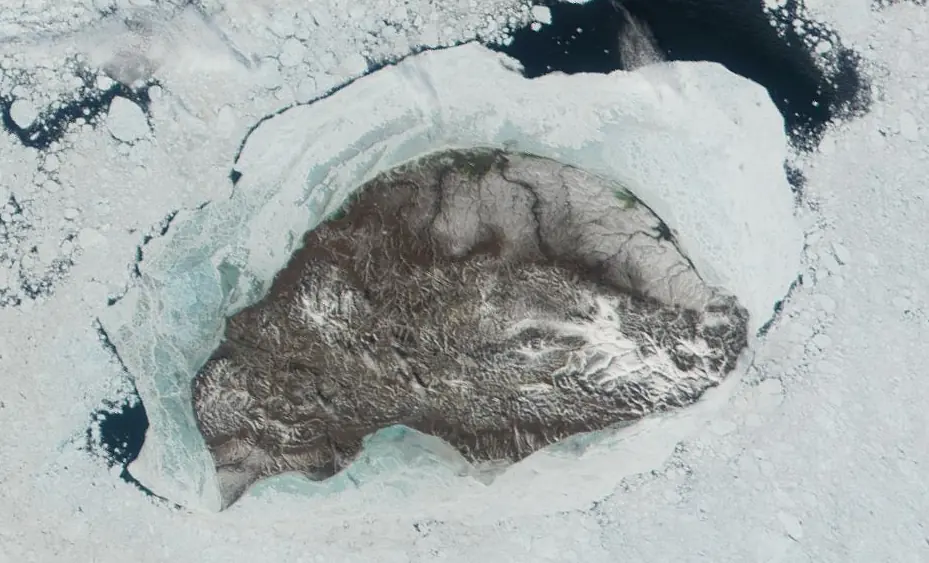
Wrangel Island, in the Arctic Ocean north-east of Siberia, sheltered the last known population of woolly mammoth, Mammuthus primigenius, several millennia after the extinction of the species on the continents. Rising sea level isolated the island about 10,000 years ago, enclosing an already reduced founding stock. The genomes show a population that recovers rapidly and then remains stable for six millennia, eliminating its most deleterious mutations while weakly harmful ones accumulate. This asymmetry is explicable: a strongly deleterious variant reduces the survival or fertility of its carrier and is eliminated by selection, whereas a weakly deleterious variant scarcely affects either and drifts freely in a small population. Extinction occurs about 4,000 years ago.
Why it matters
The case constitutes a natural experiment documented at genomic level on the survival of small populations: two hundred generations of inbreeding did not prevent the population from persisting, and the accumulation of weakly deleterious variants did not determine its extinction either. Conservation genetics draws from it two opposed and equally grounded conclusions, the possible persistence of reduced populations and their maintained vulnerability.
Dating & uncertainty
Radiocarbon applied to the most recent specimens from the island and the genomic data jointly place extinction about 4,000 years ago. Its cause remains undetermined: the genomes establish inbreeding and the slow accumulation of slightly deleterious mutations, but the analysis published in 2024 describes a demographically stable population until close to the disappearance, so that a terminal factor, if one existed, is not identified.
Our species’ history as one day
23:41:4218 min 17 s before midnight
if the 315,000 years of Homo sapiens were compressed into a single day