LANGUAGE
The First Alphabet
~3,900 years ago
History · Bronze Age · Holocene · Meghalayan
The oldest known alphabet was formed around the nineteenth century BCE by Semitic-speaking workers in the Egyptian mines of Sinai, from borrowed Egyptian signs.
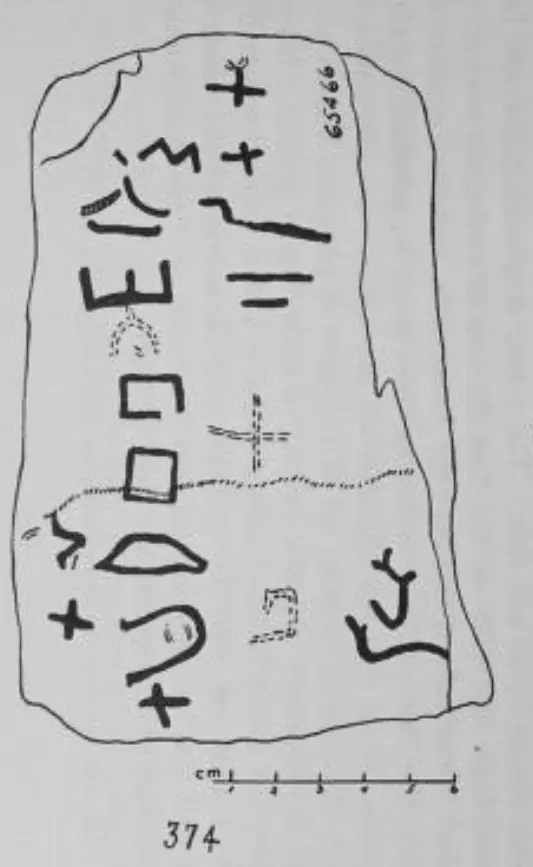
The Proto-Sinaitic script, attested around the nineteenth century BCE at Serabit el-Khadim, in the Sinai then under Egyptian administration, constitutes the oldest known alphabetic system. It was formed by Semitic-speaking workers employed in the mines, who borrowed a series of Egyptian signs by applying the acrophonic principle: each sign retains the shape of the Egyptian object but stands for the first sound of that object's name in their own language. The economy of the procedure rests on a numerical relation: a language comprises thousands of words and hundreds of syllables, but only a few dozen distinctive sounds, so that a notation of sounds requires twenty to thirty signs where a notation of words or syllables requires several hundred. Transmitted through Phoenician, this system lies at the origin of almost all alphabets in use.
Why it matters
The reduced number of signs considerably lowers the cost of learning to write, previously reserved to a body of scribes trained over several years. The Latin, Greek, Cyrillic, Arabic and Hebrew alphabets, together with several hundred other scripts, all proceed from this single invention.
Dating & uncertainty
The Serabit el-Khadim inscriptions are dated to about the nineteenth century BCE; those of Wadi el-Hol, in Egypt, are later. Descent to the later alphabets passes through Phoenician.
Our species’ history as one day
23:42:1017 min 50 s before midnight
if the 315,000 years of Homo sapiens were compressed into a single day