SOCIETY
The First Coins
~2,600 years ago
History · Antiquity · Holocene · Meghalayan
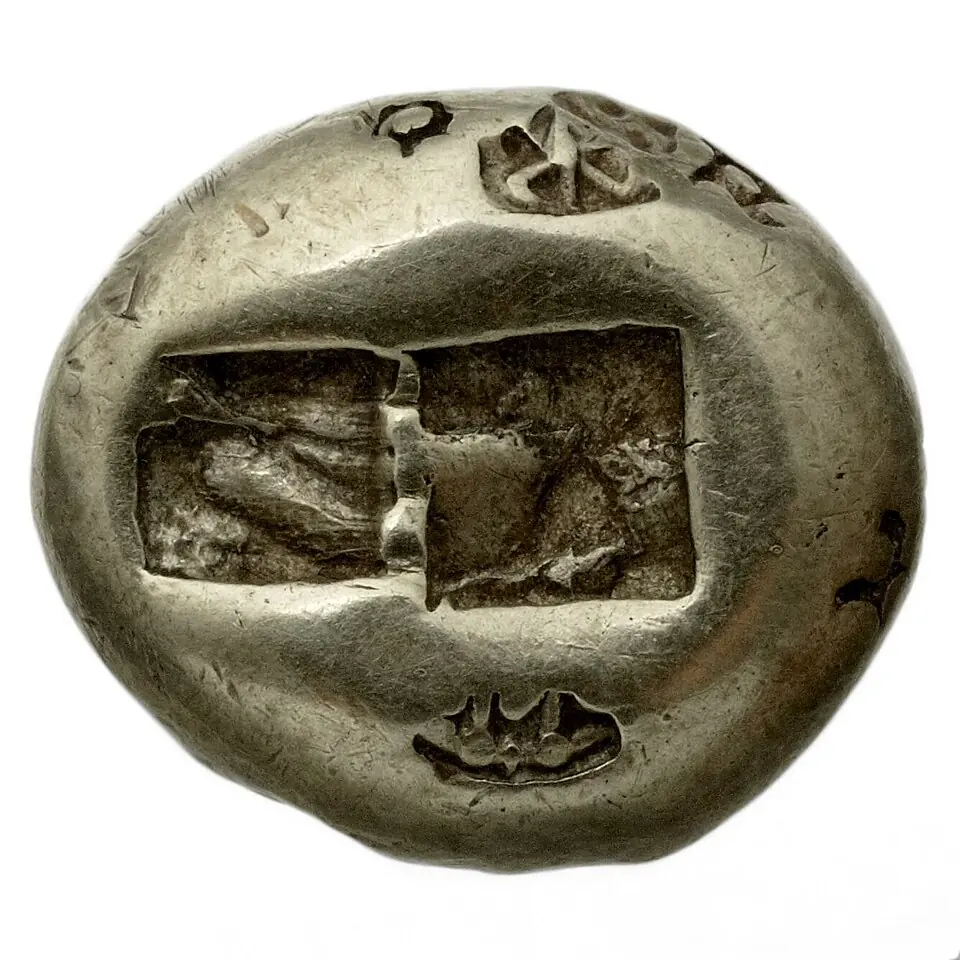
The first struck coins appeared in Lydia and Ionia, in western Anatolia, around the middle of the seventh century BCE, as lumps of electrum marked with an official punch.
The first struck coins appear in Lydia and Ionia, in western Anatolia, around the middle of the seventh century BCE, as fragments of electrum, a natural alloy of gold and silver, marked with an official punch. That marking alters the nature of the transaction: until then, each payment required weighing the metal and assessing its fineness, a slow operation presupposing scales and the agreement of the parties, whereas a struck die constitutes a public guarantee bearing on weight and fineness, so that the coin is counted rather than assayed. Within two generations dozens of Greek cities were striking in turn, silver replaced electrum, and coinage accompanied the transformations of the archaic period, legal codification, the development of markets and the payment of mercenaries.
Why it matters
Struck coinage renders value transportable, countable and independent of the persons contracting, under the guarantee of the issuing authority. The principle remains that of all later monetary instruments, including dematerialised ones. Whether coinage gave rise to markets or answered their development continues to be the object of research.
Dating & uncertainty
The first issues are Lydian and Ionian, around the middle of the seventh century BCE, in electrum. The choice of that alloy, whose variable composition complicates valuation, remains debated; recent work relates the appearance of coinage to the shift from gift exchange to market exchange, in a context of war and recourse to mercenaries. Croesus subsequently had gold and silver struck separately, ending the use of electrum.
Our species’ history as one day
23:48:0611 min 53 s before midnight
if the 315,000 years of Homo sapiens were compressed into a single day