PEOPLING
Bacho Kiro: Sapiens Reaches Europe
~45,000 years ago
Palaeolithic · Upper Palaeolithic · Last glacial
At Bacho Kiro Cave, in Bulgaria, bone fragments about 45,000 years old attest the oldest fully documented presence of Homo sapiens in Europe.
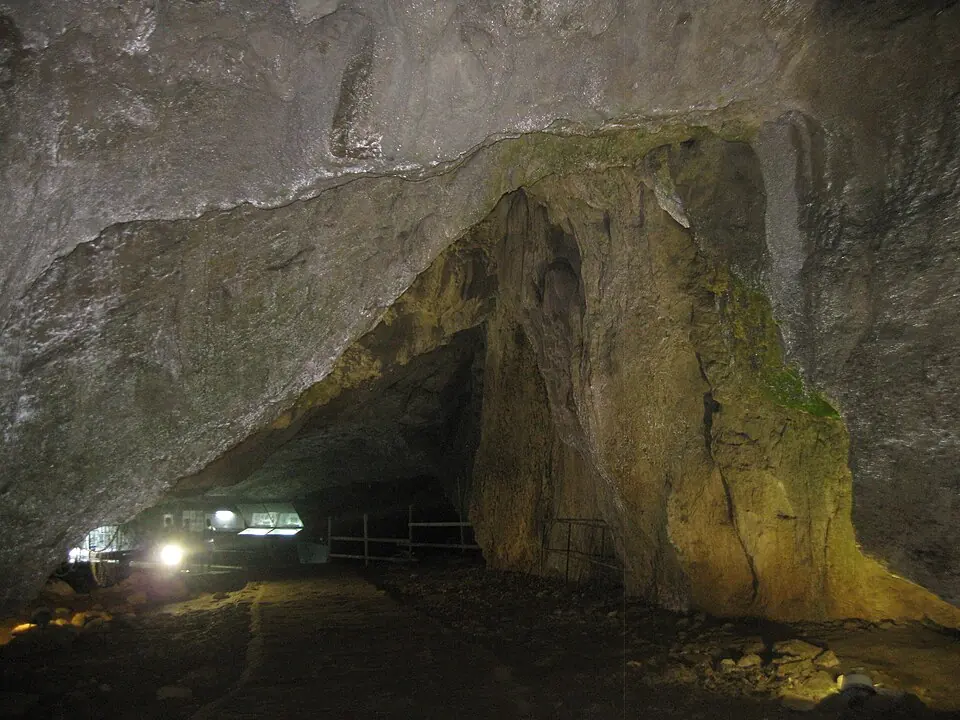
Bacho Kiro Cave, in northern Bulgaria, has yielded the oldest remains of Homo sapiens in Europe with complete supporting evidence, dated to about 45,000 years and published in 2020, associated with a new toolkit and pendants cut from cave bear teeth. The human bone fragments, too small to be identified by morphology, were recognised among thousands of animal splinters by analysis of their collagen: the composition of that protein varies slightly by species, and mass spectrometry allows attribution without any visible anatomical character, a procedure designated by the acronym ZooMS. The genomes obtained carry Neanderthal ancestors going back a few generations, and relate these populations to the later peoples of East Asia and the Americas rather than to later Europeans.
Why it matters
The site documents a peopling of Europe by successive settlements rather than by a single occupation. The Bacho Kiro populations mixed with the Neanderthals present, then their lineage disappeared from the continent, its closest relatives lying to the east; later waves subsequently altered the composition of European ancestry. The model of a single arrival replacing the resident populations is thus replaced by a succession of migrations, admixtures and local extinctions.
Dating & uncertainty
Radiocarbon applied directly to the human remains and to the layer containing them dates the assemblage to between 45,820 and 43,650 calibrated years, with a start possibly as early as 46,940. The genomes of three individuals fall between 45,930 and 42,580 years; their Neanderthal segments remain long, recombination not having had time to fragment them, which places those ancestors only a few generations back. Older traces of the species have been claimed elsewhere in Europe, without combining this threefold skeletal, lithic and genetic documentation.
Our species’ history as one day
20:34:173 h 26 min before midnight
if the 315,000 years of Homo sapiens were compressed into a single day