ENVIRONMENT
The Pleistocene Megafauna Extinction
~50,000 to 10,000 years ago
Palaeolithic · Upper Palaeolithic · Last glacial
Between about 50,000 and 10,000 years ago, half the species of large mammals disappeared, continent after continent, as humans arrived and the climate changed.
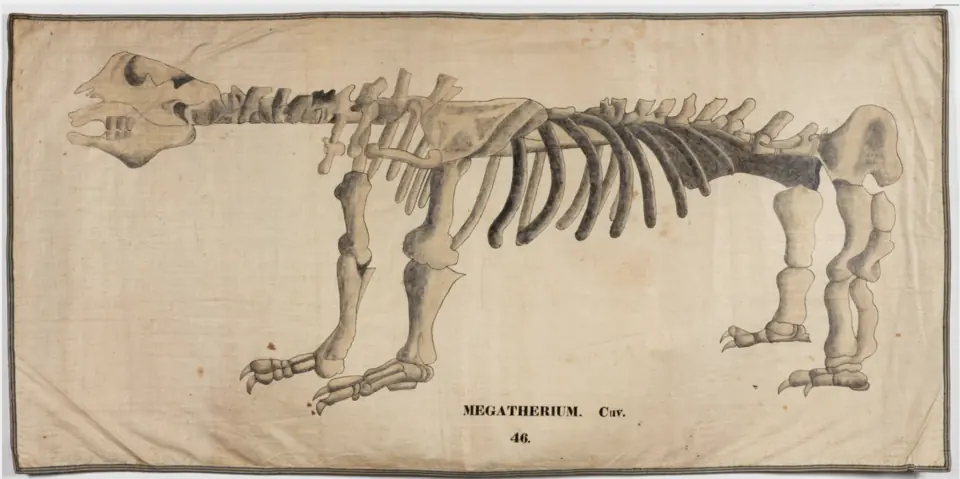
The Late Pleistocene megafauna extinction designates the disappearance, during the final act of the glaciation, of about half the species of large mammals: giant kangaroos and marsupial lions in Australia, mammoths and woolly rhinoceroses in Eurasia, ground sloths, mastodons and native equids in the Americas. The alternative between climatic and anthropogenic cause has been tested globally: the severity of the extinctions follows the geography and chronology of human expansion more closely than any climatic indicator, and reaches its maximum where human populations arrived without local precedent. That last point belongs to the evolutionary history of the prey: a fauna that evolved over millions of years alongside hominins acquired avoidance behaviours, whereas a fauna encountering humans for the first time does not identify a slow, small animal as a predator. Africa, where the two lineages coexisted from the start, records the smallest losses.
Why it matters
The episode constitutes the first transformation of the living world attributable to the human species at planetary scale, and it precedes agriculture. The loss of large herbivores and their predators altered seed dispersal, fire regimes and vegetation structure, leaving most continents without the upper levels of their food webs.
Dating & uncertainty
The losses are staggered continent by continent, which is precisely the argument: their severity follows the chronology of human arrival and is greatest where hominins arrived latest. The share attributable to climate is unresolved, one global analysis granting it only a weak effect limited to Eurasia, another a real but secondary role, while noting that it does not account for the low extinction rate in mainland Asia. The date shown falls in the middle of the interval: the Australian megafauna disappears early, that of the Americas towards the end of the glaciation, and island populations, on Wrangel in particular, survive several millennia longer.
Our species’ history as one day
21:42:512 h 17 min before midnight
if the 315,000 years of Homo sapiens were compressed into a single day