EARTH
The Grenville Orogeny
~1.09 to 0.98 billion years ago
Proterozoic · Mesoproterozoic · Stenian
The Grenville orogeny is the mountain-building episode, between 1.09 and 0.98 billion years ago, that welded the supercontinent Rodinia together along a belt three thousand kilometres long, from Labrador to Alabama.
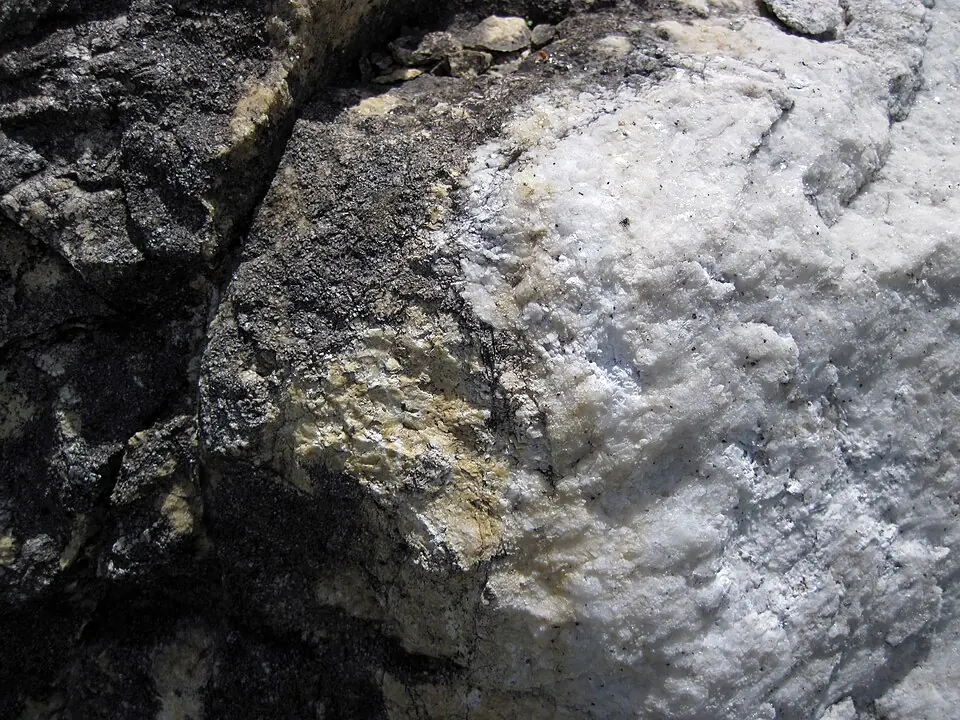
The Grenville orogeny is the mountain-building episode that welded Rodinia, a supercontinent, together. Its mountain belt, three thousand kilometres long, once ran from Labrador to Alabama. Belts of the same age survive on every other continent. The Grenville belt was raised where continents drove into one another, as the Himalayas are today. Erosion removed the peaks long ago. What remains is the orogenic root, the rock that lay deep beneath the peaks. This rock was metamorphosed at high pressure, which means that the pressure transformed its minerals, and it was brought to the surface when everything above it was removed. The orogenic root now forms the bedrock of eastern Canada.
Why it matters
Erosion removes mountains, but the suture, the line along which two continents joined, persists. Rodinia was welded along the Grenville suture and later fractured along much of its course. A range that disappeared a billion years ago therefore still determines the nature of the bedrock of eastern Canada.
Dating & uncertainty
The match between the Grenville belt and its equivalents on the other continents is uncertain: reconstructions of Rodinia still differ on which pieces of continent met, and in what order. The height that the belt reached is also uncertain. Through most of its main phase the belt appears to have been broad and hot rather than high. Evidence of a plateau, a high and flat region, is limited to the western part of the Grenville Province, the part of the belt exposed in eastern Canada.
Earth history as one day
18:14:165 h 46 min before midnight
if Earth’s 4.54 billion years were compressed into a single day