EARTH
The Magma Ocean
~4.5 billion years ago
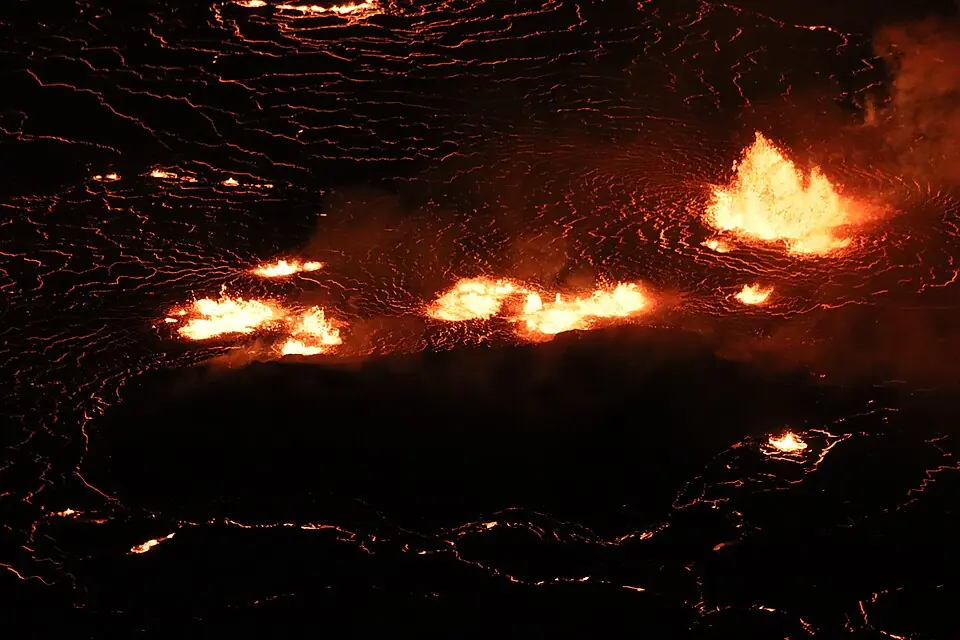
The magma ocean was a global layer of molten rock, hundreds of kilometres deep, that existed on the Earth during its first tens of millions of years, heated by the planet's assembly and then by the impact that formed the Moon.
A magma ocean is a layer of molten rock that extends over a whole planet. The Earth had one, hundreds of kilometres deep, through its first tens of millions of years. Two sources of heat kept the rock molten: first the energy released as the planet was assembled, then the collision that formed the Moon. In the molten rock, the materials of the planet separated by density, a process called differentiation. Iron, the densest abundant element, sank to the centre and gathered there as the core. The silicate rock, made of minerals based on silicon and oxygen, stayed above the core and formed the mantle. This rock crystallised, that is, turned solid, from the base of the mantle upward. Seismologists study the waves that earthquakes send through the Earth. At the very bottom of the mantle, they map two vast regions where these waves slow markedly, known as large low-shear-velocity provinces. These two regions may be what the crystallisation of the magma ocean left behind.
Why it matters
When the magma ocean solidified, the Earth was left in distinct layers, which persist. The iron core generates the planet's magnetic field. The mantle drives the displacement of the continents. The lightest rock rose to the surface and formed the first crust, the solid outer layer of the planet.
Dating & uncertainty
Researchers date the formation of the core with radioactive clocks, elements that decay at a known rate, and place it within roughly the first thirty million years of the solar system. The magma ocean above the core left no datable material. Its depth and the time it took to solidify are known only through models and chemical budgets, which are tallies of the elements in each layer.
Earth history as one day
00:12:4123 h 47 min before midnight
if Earth’s 4.54 billion years were compressed into a single day