EARTH
The Acasta Gneiss: Oldest Rock
~4.03 billion years ago (older claims to 4.3 Ga)
The Acasta gneiss, an outcrop in the Northwest Territories of Canada, is the oldest intact rock whose age is undisputed, about 4.03 billion years.
The Acasta gneiss is an outcrop in the Northwest Territories of Canada. Gneiss is a banded rock formed deep in the crust under heat and pressure. Geologists date it by the uranium-lead method, applied to its zircons. Zircons are small resistant crystals that contain uranium, which decays into lead at a known rate. The result is about 4.03 billion years. The rock formed when the planet was roughly half a billion years old. Older crystals exist, but they are loose grains eroded out of rocks that have long since vanished. A visitor can still walk up to the Acasta gneiss and touch it.
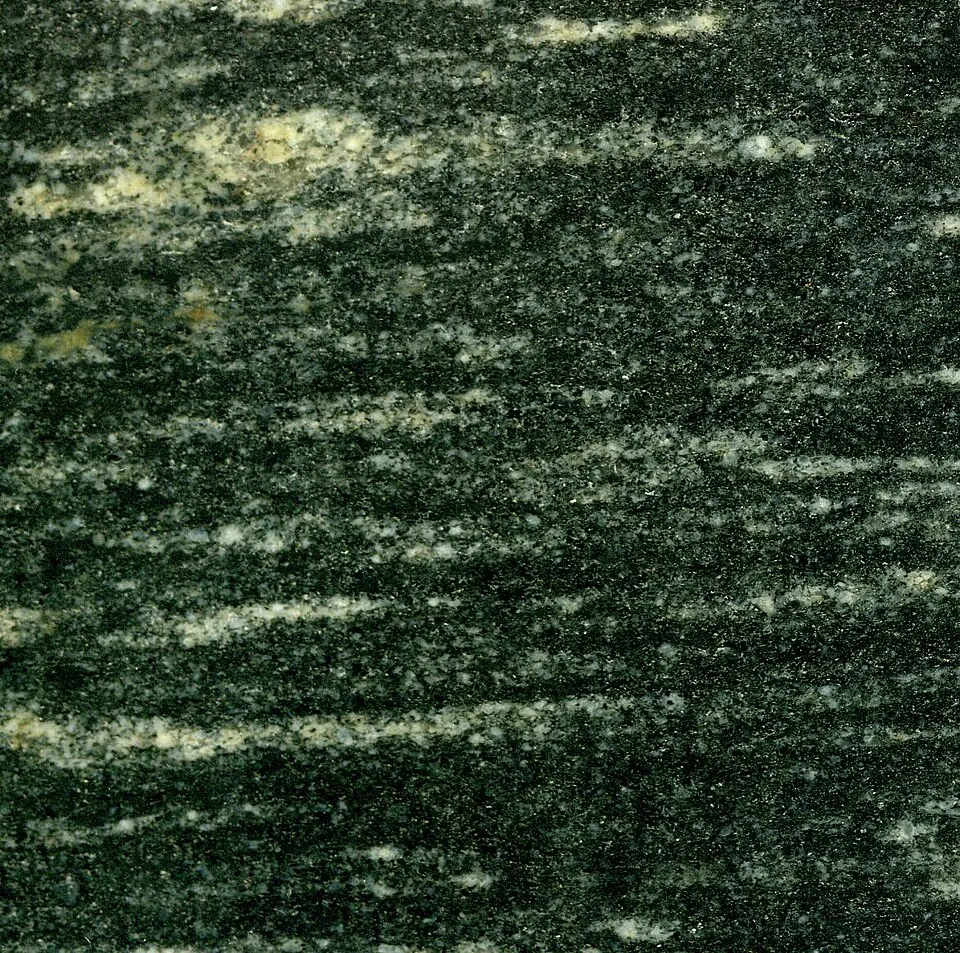
Why it matters
Geologists reconstruct the history of the Earth before the Acasta gneiss from scattered grains. From the Acasta gneiss onward they have rock in place that can be mapped, and the earliest history of the planet no longer rests on inference alone.
Dating & uncertaintyDisputed
The age of the Acasta gneiss, 4.03 billion years, is not contested. It comes from the uranium and lead contained in its zircons. O'Neil and colleagues (2008) claim that a belt of rock in Quebec is older still, between 4.16 and 4.3 billion years. Their dating uses samarium-146, an isotope, that is, one variety of the atoms of samarium. Samarium-146 disappeared entirely early in the history of the Earth, and it can now be measured only through the neodymium, another element, that it left behind. Such a vanished isotope is called an extinct clock. Andreasen and colleagues (2009) published a formal objection in Science, and the discussion continues. Sole and colleagues (2025) studied intrusions within that belt, bodies of magma that solidified inside older rock. They found that the two samarium clocks, one extinct and one still active, agree on an age near 4.16 billion years.
Earth history as one day
02:41:4521 h 18 min before midnight
if Earth’s 4.54 billion years were compressed into a single day