EARTH
The Origin of Earth's Gold
~4.4 billion years ago
The gold in the Earth's rocks is thought to have arrived about 4.4 billion years ago with bodies that struck after the iron core had formed, because gold and platinum dissolve readily in molten iron and should have sunk into that core.
Gold and platinum are siderophile elements, meaning that they dissolve readily in molten iron. When the iron drained to the centre of the Earth and formed the core, it should therefore have carried almost every gram of gold and platinum down with it, and left almost none in the rock above. That rock, called the mantle, contains far more gold and platinum than this. The usual explanation is the late veneer, a veneer being a thin surface layer. In this explanation, a final series of asteroids struck the Earth after the core had finished forming. These asteroids amounted to a fraction of one per cent of the planet's mass, and their metals mixed into the rock without reaching the core.
Why it matters
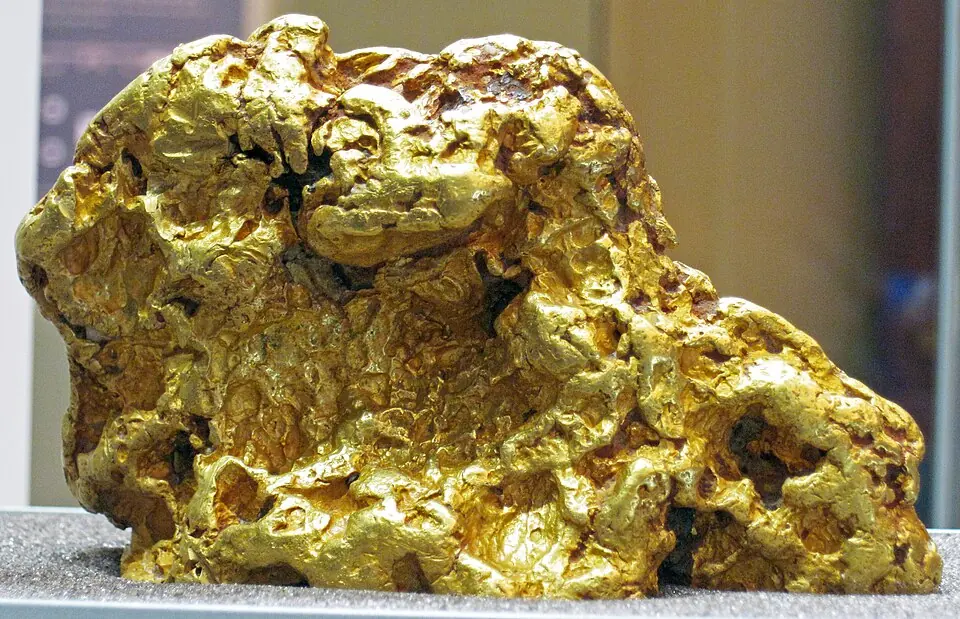
All the gold ever mined comes from rock that should contain almost none. This gold reached the Earth late, possibly with the same final asteroids to which some authors attribute the delivery of the Earth's water.
Dating & uncertaintyDisputed
The late veneer has become harder to reconcile with the calculations. Modelling by Anslow and colleagues (2026) shows that the metal of any impactor, or striking body, larger than about a kilometre passes through the mantle to the core. This metal leaves no trace in the mantle, which is precisely where the excess of gold and platinum is measured. For the explanation to remain valid, either the incoming metal fragmented into dust fine enough to remain suspended in the rock, or a large share of the late asteroids were oxidised, metal-poor bodies, in which metal is combined with oxygen. The simple version of the explanation no longer suffices.
Earth history as one day
00:44:2423 h 16 min before midnight
if Earth’s 4.54 billion years were compressed into a single day