EARTH
Komatiites: the Hottest Lavas
~3.5 to 2.7 billion years ago
Komatiites are lavas that erupted between 3.5 and 2.7 billion years ago at about 1,600 °C, hundreds of degrees hotter than any modern lava, and were fluid enough to flow like water.
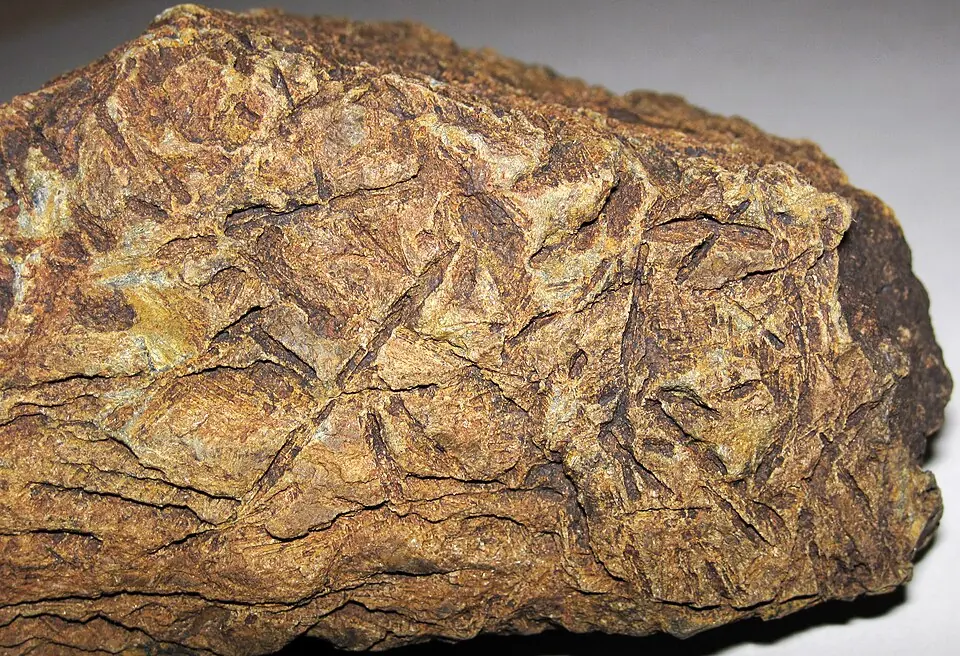
Komatiites are lavas that erupted at temperatures of the order of 1,600 °C, several hundred degrees above any modern lava. This heat made them extremely fluid, and they flowed like water rather than creeping. As they cooled, they crystallised into blades of olivine as long as a hand. Olivine is a green mineral rich in magnesium. This texture is known as spinifex, after the Australian grass that it resembles. No comparable lava has erupted since, because the interior of the Earth has cooled too far to melt its mantle to that extent. The mantle is the thick layer of rock between the crust and the core.
Why it matters
Komatiites indicate, more directly than any other rock, how far the planet had cooled in the Archaean, the eon of Earth history in which they erupted. Geologists therefore use them as a thermometer for that eon. Komatiites also explain why a substantial share of mined nickel comes from rocks of this age.
Dating & uncertaintyDisputed
Komatiites erupted at temperatures reaching 1,600 degrees, some three hundred degrees hotter than any lava today. For fifty years researchers have debated what such temperatures require. On one view, the mantle was several hundred degrees hotter than it is today. On the other, hydrated rock, which contains water, melted at ordinary temperatures above a descending plate, a slab of the Earth's rigid outer shell sinking into the mantle. The water content measured in the crystals now supports the hot mantle.
Earth history as one day
05:29:5218 h 30 min before midnight
if Earth’s 4.54 billion years were compressed into a single day