EARTH
The First Continents
~3.2 to 2.5 billion years ago
The first continents are blocks of continental crust, rich in silica and less dense than the ocean floor, that grew thick enough to rise above the sea and stay there between about 3.2 and 2.5 billion years ago.
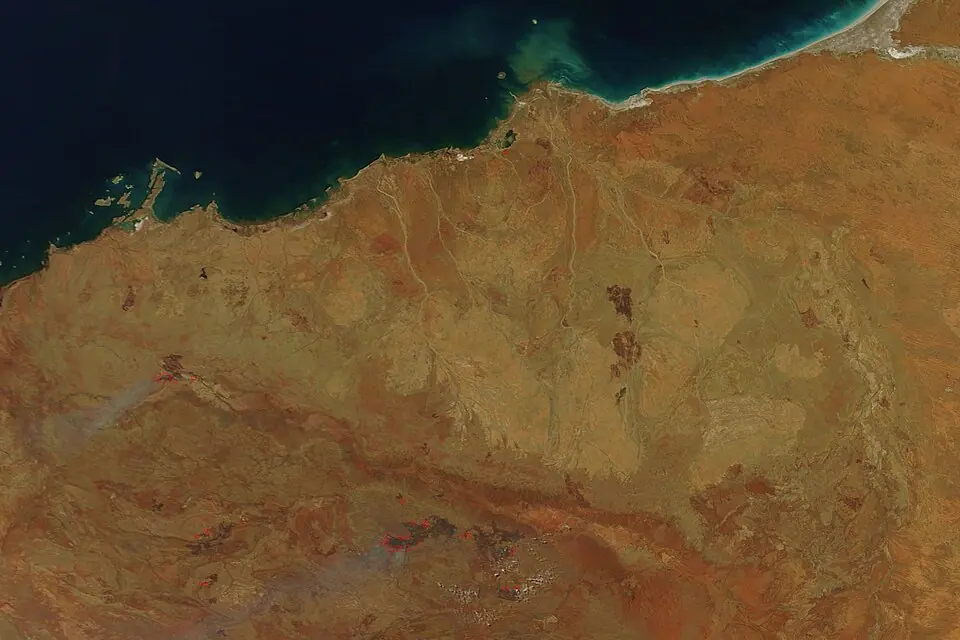
The first continents are the oldest blocks of continental crust that stayed above the sea. Continental crust is rich in silica, a compound of silicon and oxygen, which makes it less dense than basalt, the volcanic rock of the ocean floor. It therefore stands higher on the mantle, the thick layer of rock beneath the crust. Earlier islands had come and gone. When the continental crust had grown thick enough, its surface rose above sea level, and this land endured. Its blocks were anchored by lithospheric keels, roots of rigid, buoyant mantle rock that reach 150 to 250 kilometres down. The keels resist being dragged into the convecting mantle, the part of the mantle that slowly flows. Geologists call the blocks that endured cratons, and every modern continent has one at its centre.
Why it matters
Once land stays above the sea, rain weathers its rock, that is, breaks it down, and rivers carry the nutrients of the rock to the sea, where carbon is buried. Dry land also makes a terrestrial environment available.
Dating & uncertainty
Fragments of land emerged as early as 3.8 billion years ago, but only briefly. Stable land on the scale of a craton appeared between 3.2 and 3.0 billion years ago. The present ratio of land to sea was reached around 2.5 to 2.2 billion years ago.
Earth history as one day
07:05:0116 h 55 min before midnight
if Earth’s 4.54 billion years were compressed into a single day